Key Takeaway
- Certifications provide a solid career foundation, while real-world experience strengthens adaptability and decision-making.
- The most effective Agile professionals are able to combine formal training with hands-on application.
- Generative AI courses are reshaping the Agile skillset and should be part of ongoing learning.

The conversation around getting Agile certified versus relying on hands-on experience continues to draw different perspectives. In Singapore’s fast-paced digital economy, both elements play essential roles in shaping Agile professionals who can deliver real value. This begets the question—how do you know which to focus on, or how can you balance both?
1. The Value of Agile Certification
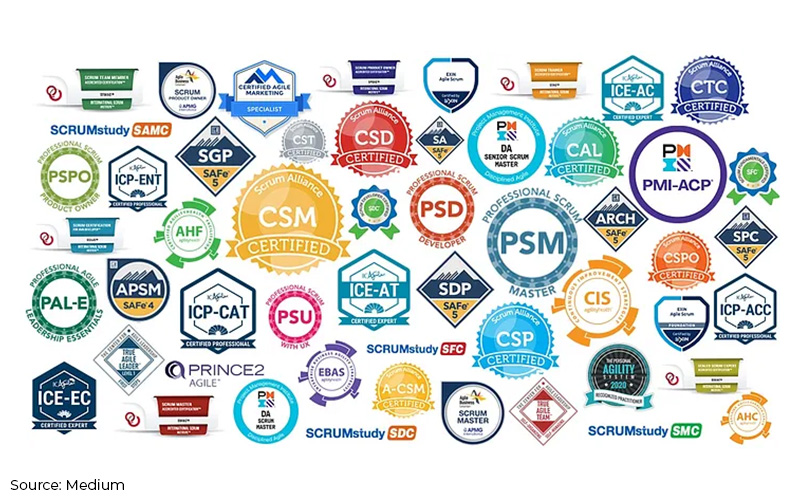
The value of Agile certification lies in its structured learning path. Whether you are pursuing a Certified Scrum Master (CSM), Product Owner, or Agile Practitioner qualification, these programmes provide clarity on frameworks, terminology, and core principles. You learn not just what Agile is, but why it works.
For employers, certification acts as a benchmark of foundational knowledge and a commitment to ongoing development. In Singapore’s competitive job market, having a recognised credential from an Agile certification institute like AgileAsia often boosts employability and opens doors to Agile roles in tech, finance, and government sectors.
With the rise of digital tools, many professionals recognise the importance of supplementing their certification with Generative AI courses. These programmes offer valuable insight into how technologies like AI can assist with backlog grooming, sprint planning, and even user story generation, adding a powerful edge to your Agile skillset.
Ultimately, getting Agile certified reflects your commitment to mastering the core ideas behind Agile Methodology, making it a valuable first step.
2. The Significance of Real-World Experience

While certifications equip you with theory, real-world application is where Agile principles are put to the test. Being part of a project where priorities change, client expectations evolve, and timelines compress gives you first-hand insight into how Agile operates in practice.
In real-world environments, teams face constraints and complex interpersonal dynamics that no course can fully simulate. Practitioners learn to adapt quickly, make trade-offs, and guide teams through uncertainty. This lived experience is often what separates an Agile beginner from a seasoned leader.
Employers today look for professionals who have not only completed training but also contributed meaningfully to projects. Experience shows that you can apply Agile practices beyond textbook examples, whether that means facilitating sprint retrospectives, managing stakeholder expectations, or refining product roadmaps.
3. Combining Theory and Practice

The strongest Agile professionals are those who possess a combination of both. Getting Agile certified gives you the frameworks; applying them lets you understand when and how to flex them.
Agile is not a fixed formula; it is an approach that thrives on responsiveness and iteration. Certifications provide a consistent language across teams, but experience builds your confidence in applying Agile tools across different industries and team dynamics.
Looking to dip your toes into the world of Agile? Start with a course, then seek opportunities to apply your learning. If you are experienced but uncertified, consider formal training to reinforce your knowledge and align with industry standards.
This combination builds well-rounded professionals who can lead Agile transformations, not just participate in them.
4. The Evolving Landscape of Agile Practices

Agile is no longer confined to software development. Today, it is used across HR, marketing, finance, and operations. As Agile practices evolve, so too must the skills of those leading them.
Recruiters seek individuals who can adapt to shifting contexts, work cross-functionally, and stay current with digital trends. While getting Agile certified remains important, it is the ability to apply those principles to new scenarios that makes a candidate truly stand out.
Real-world experience allows professionals to experiment, learn from missteps, and refine their approach. Certification, meanwhile, ensures a common foundation and language across the team.
5. The Role of Generative AI Courses in Agile Skillsets

AI is becoming a critical enabler in Agile workflows. From automated test generation to sprint retrospectives powered by data insights, AI can significantly improve team velocity and clarity.
Generative AI courses have become a key programme in building modern Agile skillsets. These courses teach professionals how to integrate tools that support agile tasks, like intelligent backlog refinement, sprint analytics, and predictive roadmapping.
At AgileAsia, we have seen growing interest in these courses from Agile professionals across Singapore. Integrating AI into your Agile workflow does not replace human judgement, but it enhances your ability to work efficiently and make data-driven decisions.
Pairing generative AI training with an appropriate course, such as CSM, can give you both the foundation and forward-looking skills needed in 2025 and beyond. Check out AgileAsia’s CSM course details to better understand what it entails before deciding if it is right for you and your career aspirations.
The debate between getting Agile certified and gaining experience is not about choosing one over the other; it is about recognising the strength in both. Certification provides structure, common language, and recognition. Real-world experience brings nuance, adaptability, and leadership potential.
As Agile continues to shape project delivery across industries in Singapore, professionals who can blend theory with practice, and stay curious about emerging tools like AI, will remain in high demand.
At AgileAsia, we offer a range of programmes designed to support this journey. From CSM to generative AI courses, our training equips you for the agile workplace of the future.
To find out more about our courses and programmes, please contact us today.